Trump Puts The Allies To The Test, World Is Watching, The Moment Of Truth Has Arrived – Ep. 3860
Watch The X22 Report On Video
NYC is now doing what California did, they are raising the minimum wage, this will not work, they are treating the symptom not the disease. The Iran mission is effecting the inflation rate, soon this will be under control. Trump sold oil leases in the Gulf Of America, drill baby drill. Judge Pirro goes after the Fed and Judge Boasberg blocks her, they are protecting the source. Trump counters the SC tariff ruling. The [DS] is losing across the globe. Trump is now the hunter and he hunting down the [DS] system they established and destroying it. Iran is controlled by the [DS]/Globalists and they are no realizing that they cannot protect and use it anymore. Trump has given the allies an ultimatum, either help keep the Strait of Hormuz safe or show the world who and what you really are. The moment of truth has arrives. Trump is the lion and he is now taking out all the hyenas.
Economy
As NYC Considers a $30 Minimum Wage, Business Owners Are Warning About the Consequences
- New York City stands to make a decision about its minimum wage that can only hinder growth, create layoffs, and result in price hikes.
- City Council recently introduced a bill to set the minimum wage at $30 per hour. Democratic City Councilwoman Sandy Nurse put the “$30 for Our City” legislation forward, WPIX reported on Tuesday.
- The outlet laid out the wage hike scheme from the bill.
- Businesses and franchises that employ more than 500 people must pay $20 an hour in 2027, $23 in 2028, $26 in 2029, and $30 by 2030.
- Small employers have a different road map, with a $19 minimum in 2027, $21.50 in 2028, $24 in 2029, $27 in 2030, and $29 in 2031.
- The increase would include a cost-of-living adjustment and yearly hikes that account for inflation.
- “There’s only so much you can charge for a slice of pizza or a cheeseburger,” she added.
- In April 2024, California passed a $20 minimum wage for fast food workers, and the effects were immediate. The New York Post reported that chains like Burger King saw menu items like the Texas Double Whopper go from $15.09 to $16.89, a 12 percent increase.
- The California Globe, citing a survey by the Berkeley Research Group, noted that 98 percent of fast-food restaurants said they raised menu prices, 89 percent reduced employee hours, 73 percent limited employee shifts or overtime, and 70 percent reduced staff or consolidated positions.
Source: thegatewaypundit.com
The real problem isn't gov't purchases (what shows up in the GDP report) but gov't transfers – welfare payments exceeded an annualized $5 trillion in Jan for the first time ever outside of the pandemic; this will bankrupt America: pic.twitter.com/s0lNnpWzZ4
— E.J. Antoni, Ph.D. (@RealEJAntoni) March 13, 2026
Here are four measures of annual inflation, all using personal consumption expenditures, ranging from 2.4% to 3.1% – none of these have been at or below the 2.0% target since Apr '21 and they haven't all been at or below the target since Feb '21… pic.twitter.com/niFeZO3ZYD
— E.J. Antoni, Ph.D. (@RealEJAntoni) March 13, 2026
Oil is bleeding into general inflation.
A month ago we were at 0.7% inflation.
Now that's 1.5% and rising fast. https://t.co/DXDJVrVZuf— Peter St Onge, Ph.D. (@profstonge) March 13, 2026
It was unthinkable a couple of weeks ago, but could the next move by the Fed be a rate hike?
- Financial markets are starting to think it could happen
- With fuel prices soaring since the start of the war with Iran, a question has surfaced that was almost unimaginable a few weeks ago: Could the next move by the Federal Reserve be an interest-rate hike?
- Financial markets are starting to think it could happen. Traders in derivative markets see a roughly 25% probability of a rate hike this year.
Source: marketwatch.com
- Sometimes it’s a tad amazing just how fast this nation’s energy policy turned 180 degrees. Drill, baby, drill is now the order of the day, and the oil companies are digging in. On Thursday, we learned that the second round of big, beautiful Gulf of America oil and natural gas leases has just concluded, and has drawn $47 million in bids.
The second auction of oil and gas leases in the Gulf of America since President Donald Trump’s election in 2024 drew almost $47 million in high bids, with 98% of the activity in offshore areas deeper than 800 meters, according to sales results released by the Bureau of Offshore Energy Management.
The Big Beautiful Gulf 2 auction in New Orleans on Wednesday drew 38 bids from 13 companies on 25 blocks covering about 141,000 acres in federal waters off the coasts of Texas, Louisiana and Mississippi, according to the agency.
.
Source: redstate.com
Job Openings Unexpectedly Surge By Almost 400K: Biggest Increase Since 2024
- surge in US job openings, which rose by 396K in January, the biggest increase since Nov 2024, to 6.946 million from 6.550 million and the highest since last October.
- Looking at the details, we find the the biggest increases were in finance and insurance (+184K), which is odd for a sector about to be swept by the private credit crisis. Other sector that saw a big jump in job openings were Trade, Transportation and Utilities, driven by a 130K increase in retail trade jobs; Private education and health services job opening also jumped by 123K, while Leisure and Hospitality increased by 185K. Professional and business services was the only major sector to see a sharp drop in job openings.
Source: zerohedge.com
- When the Supreme Court made their ridiculous decision to nullify the import tariffs under the International Emergency Economic Powers Act (IEEPA) use, the high court noted several alternate approaches would not be legally problematic. One of those approaches would be the use of Section 301 trade tariffs.
- USTR Jamieson Greer quietly announced that a Section 301 review would be taking place for the following countries: China, the European Union, Singapore, Switzerland, Norway, Indonesia, Malaysia, Cambodia, Thailand, Korea, Vietnam, Taiwan, Bangladesh, Mexico, Japan, and India.”
- ♦ Section 301 tariffs are a trade enforcement mechanism established under the Trade Act of 1974. They allow the U.S. government to impose tariffs on imports from countries that are found to be engaging in unfair trade practices. The Office of the United States Trade Representative (USTR) conducts investigations to determine if a country is violating trade agreements, and if so, it can impose tariffs as a corrective measure {SOURCE}
- USTR PRESS RELEASE – WASHINGTON —
- “The United States will no longer sacrifice its industrial base to other countries that may be exporting their problems with excess capacity and production to us. Today’s investigations underscore President Trump’s commitment to reshore critical supply chains and create good-paying jobs for American workers across our manufacturing sectors,” said Ambassador Greer.
- “The Trump Administration’s reindustrialization efforts continue to face significant challenges due to foreign economies’ structural excess capacity and production in manufacturing sectors. Across numerous sectors, many U.S. trading partners are producing more goods than they can consume domestically. This overproduction displaces existing U.S. domestic production or prevents investment and expansion in U.S. manufacturing production that otherwise would have been brought online. In many sectors, the United States has lost substantial domestic production capacity or has fallen worryingly behind foreign competitors.” (read more)
- Additionally, Section 232 [Steel and Aluminum examples] of the Trade Expansion Act of 1962 (19 U.S.C. §1862, as amended) authorizes the President to impose trade restrictions—such as a tariff or quota—if the Secretary of Commerce determines, following an investigation, that imports of a good “threaten to impair” U.S. national security. {SOURCE}
- Section 232 is currently covering all the steel and aluminum import tariffs.
- Section 122 of the Trade Act of 1974 allows the U.S. president to impose tariffs of up to 15% to address “large and serious” balance-of-payments deficits. This authority can be exercised without prior congressional approval for a limited duration of 150 days. After this period, any tariffs must be extended by Congress. {SOURCE}
- USTR Greer is now walking through the process of deploying Section 301 and will eventually become the legal underpinning to replace Section 122 and retain all tariff status without congressional extension needed. Most of this is technical and legal compliance as several of the aforementioned nations have already finalized free trade agreements.
source: theconservativetreehouse.com
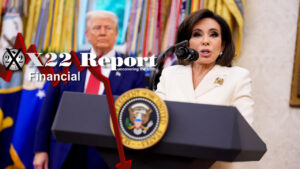
Jeanine Pirro, serving as the U.S. Attorney for the District of Columbia, initiated a criminal investigation through the Department of Justice into Federal Reserve Chair Jerome Powell and the Federal Reserve Board of Governors. The probe centers on allegations that Powell provided false or misleading testimony to Congress in June 2025 regarding massive cost overruns—exceeding $1 billion beyond the initial $1.9 billion estimate—for renovations to the Fed’s headquarters in Washington, D.C. Prosecutors were examining potential charges related to false statements, fraud, and lack of accountability in handling public funds, using grand jury subpoenas to seek related records from the Fed. The investigation stemmed from Powell’s congressional appearance, where his statements about the renovation costs reportedly conflicted with publicly available documents. Pirro’s office began gathering information in November 2025, attempted multiple contacts with the Fed in December 2025 and early January 2026 (which went unanswered), and issued two grand jury subpoenas to the Fed on January 9, 2026—not directly to Powell himself. Powell responded publicly with a video statement on January 11, 2026, claiming the probe was politically motivated harassment tied to President Trump’s repeated demands for lower interest rates, rather than genuine concerns over the building project. On March 13, 2026, U.S. District Chief Judge James Boasberg quashed the subpoenas in a strongly worded ruling, stating there was “a mountain of evidence” indicating they were issued with an “improper motive” to retaliate against Powell over monetary policy disagreements and pressure him to cut rates or resign. Boasberg emphasized that no credible evidence of criminal activity by Powell had been presented, describing the subpoenas as a pretext to undermine the Fed’s independence. During a press conference that day (as shown in the provided image and the X post), Pirro sharply criticized Boasberg as an “activist judge” with antipathy toward the Trump administration, arguing his decision illegally blocked the grand jury’s ability to investigate and granted Powell unwarranted “immunity.” She vowed that the DOJ would appeal the ruling and potentially seek Boasberg’s reconsideration, insisting that “no one is above the law” and that the probe was essential for transparency in federal spending.
🚨 BREAKING: US Attorney Jeanine Pirro just announced activist Judge Boasberg has BLOCKED a Grand Jury from investigating the Federal Reserve
Pirro says this block is TOTALLY ILLEGAL.
THE HOUSE NEEDS TO START IMPEACHING THESE ACTIVIST JUDGES. ENOUGH IS ENOUGH!
"As a result,… pic.twitter.com/7a5yz7sM4P
— Nick Sortor (@nicksortor) March 13, 2026
Jerome Powell today is now bathed in IMMUNITY preventing my office from investigating the federal reserve. This is wrong, and it is WITHOUT legal authority.”
Political/Rights
DOGE
Geopolitical
Protesters set fire to Communist Party headquarters in Morón, Cuba, during demonstration over fuel crisis, blackout across island, local media reports. – factal
— AZ Intel (@AZ_Intel_) March 14, 2026
It looks like Cuban President, Miguel Diaz-Canel, has wisely opted to pursue the diplomatic route with Trump, as opposed to the Venezuela/Iran route.
Trump shared this article on Truth Social, confirming that they are working on a deal with Cuba.
PEACE THROUGH STRENGTH! pic.twitter.com/e4PyZPpuUe
— Clandestine (@WarClandestine) March 13, 2026
Holy shit 👀
Trump just shared a video of Mexican President Sheinbaum, confirming Trump offered to “eradicate the cartels”.
However, she rejected his offer.
This confirms what I have been preaching, that Trump’s plan is to eradicate the cartels, and all Deep State assets… pic.twitter.com/nJZzQu8QZi
— Clandestine (@WarClandestine) March 13, 2026
around the globe. However, if Sheinbaum is not willing to cooperate like other nations, such as Ecuador, then she might be flirting with the “find out” zone. Trump is going to use the US MIL to obliterate the cartels in Mexico, whether Sheinbaum agrees or not, so it would behoove her to cooperate. If not, there’s a high probability that Delta Force shows up in her bedroom.
WATCH: US Embassy in Venezuela raises American flag for the first time in 7 years pic.twitter.com/dsygeJQXiF
— Insider Paper (@TheInsiderPaper) March 14, 2026
North Korea Fires 10 Ballistic Missiles, Flexing During US Regional Drills
- Saturday saw Pyongyang engage in more muscle-flexing, as its military fired about 10 ballistic missiles toward the eastern sea, according to South Korea’s military said, staging its own show of force as the rival South conducts a joint military exercise with the United States.
- Japan’s Defense Ministry indicated the warheads landed in waters outside the country’s exclusive economic zone, which is somewhat typical anytime the north conducts missile tests.
- Regional media further says “The Japanese government has convened an emergency response team consisting of officials from relevant ministries and agencies at the crisis management center in the prime minister’s office. The team is collecting information and confirming if there is any damage.”
- South Korea is meanwhile on high alert and says it has stepped up surveillance and military readiness in light of the new drills.
- Pyongyang’s actions aren’t completely unprovoked, as the muscle-flexing comes as there’s the same south of the border, per NBC:
-
- To be sure, while the Kim regime traditionally rages over the drills on its border, claiming they are rehearsals for invasion, although it may well be right: US forces have been flooding into the Pacific over recent years with warships, warplanes, missiles and the army all on standby.
- However, some of these regional assets – especially anti-air defense systems – are now being transferred over to the Middle East region amid the now over two-week-long Iran war.
Source: zerohedge.com
BREAKING: DHS confirms to @FoxNews that the Michigan synagogue attacker has been ID’d as Ayman Mohamad Ghazali, a Lebanese national who first entered the U.S. in 2011 on an IR1 immigrant visa as the spouse of a U.S. citizen. He was naturalized into a U.S. citizen in 2016 during… pic.twitter.com/hsXvFKP2FZ
— Bill Melugin (@BillMelugin_) March 13, 2026
the Obama administration.
Today’s cover: First photo of Michigan terrorist who tried to murder Jewish toddlers — as it’s revealed his brothers were Hezbollah https://t.co/0pys6yd5T3 pic.twitter.com/hozAUDO4jy
— New York Post (@nypost) March 14, 2026
No it is right! Sad but true and this poor man paid the ultimate price. I’m not sure if he has a wife, kids but so sad as he looks like a really nice guy and to go through so much in his life just to be killed on our soil at school by a lunatic is infuriating.
Rest easy with… pic.twitter.com/C8OG5GlYEQ
— GinnyM (@PatriotXV11) March 13, 2026
I wonder where Tucker got the idea that the Qataris arrested Mossad agents instead of IRGC agents? https://t.co/C8X52gqg2s
— Will Chamberlain (@willchamberlain) March 15, 2026
If the CIA knew that he was talking to the Iranians, then President Trump would have known that also, when he invited Tucker into the Oval a few days before the strike.
Which means Trump may have used Tucker to deceive the Iranians about the likelihood of an impending attack https://t.co/TkbjY34js4
— Will Chamberlain (@willchamberlain) March 15, 2026
I know you think you are smart, but everyone knew you were a foreign asset and you were used as a counter-intelligence asset (as I described in my article on the war, Tucker was the Iranian spy). You got used as a counter-intel asset to convince them nothing was happening.
— Dandalf (@DanTalks1) March 15, 2026
got used to kill the Iranian leadership. You personally were one of the key reasons they believed nothing was happening. Which gave them the confidence to convene a meeting with their entire high command. You did your job well, being a traitor. Imagine thinking that you’d get a prime time slot with the president on the eve of a war, after repeatedly humiliating him and him calling you a retard multiple times publicly. You are as arrogant as you are stupid. But now your usefulness has ended, and its time to go. Good luck my guy, you are going to need it. Thanks for helping us kill all your friends tho, you did great work.
I don’t think the criminal referral is about Fara pic.twitter.com/NRrSWCEpCT
— Will Chamberlain (@willchamberlain) March 15, 2026
- Tucker Carlson appeared on Redacted from Maine, where he blasted the U.S.-Israel-Iran strike decision and suggested the officials behind the joint operation “should be in jail.”
- Former Fox News host Tucker Carlson, who once claimed to be MAGA, now says the heroes who approved Operation Epic Fury, including President Trump himself, belong behind bars for daring to partner with Israel against the world’s top sponsor of terrorism.
- During an appearance on Redacted with former Fox News host Clayton Morris and Natali Morris, Carlson launched into a broadside against the Trump administration’s handling of the Iran operation, warning that America had surrendered its own strategic judgment in favor of a joint war-making arrangement with Israel.
- We all know the facts. President Trump took full ownership of the historic U.S.-Israel partnership in Operation Epic Fury, the decisive campaign that neutralized Iran’s nuclear ambitions, obliterated its missile programs, sank its navy, and took out Supreme Leader Ayatollah Khamenei and his top terror enablers.
War/Peace
The Economist Blasted with Flurry of Posts for Bemoaning Death of Murderous Ayatollah
Increasingly, over the course of three decades, Ali Khamenei knew that he was personally in the Great Satan’s sights. This did not daunt him. He felt, always, that he had divine right on his side https://t.co/6NLka10d8Z
— The Economist (@TheEconomist) March 7, 2026
From the WaPo's Khamenei obituary. This is not satire. pic.twitter.com/kO5yF4F8Z6
— End Wokeness (@EndWokeness) March 1, 2026
- “If Trump died today, they would write nothing even remotely this nice about him. We all know it,” commentator Matt Van Swol said.
Source: thegatewaypundit.com
🚨 BREAKING: President Trump says he's hearing that Iran Supreme Leader Mojtaba Khamenei is DEAD, and that Iran desperately wants a ceasefire deal
"I’m hearing he’s not alive, and if he is, he should do something very smart for his country, and that’s surrender!"
“Iran wants to… pic.twitter.com/XHYKrtYoMp
— Eric Daugherty (@EricLDaugh) March 14, 2026
to make a deal, and I don’t want to make it because the terms aren’t good enough yet,” Trump told NBC On the Strait of Hormuz: “We’re going to be sweeping the strait very strongly, and we believe we’ll be joined by other countries who are somewhat impeded, and in some cases impeded from getting the oil.” On Khamenei: “I don’t know if he’s even alive. So far, nobody’s been able to show him.” 47 is PRESSING HARD
This story is 100% FAKE NEWS.
CNN decided to run this garbage based on three anonymous “sources familiar with discussions.”
This is despite the fact that myself, the Secretary of War, the Secretary of State, and multiple lawmakers (who were actually present for the recent… pic.twitter.com/IchmwpDnO7
— Karoline Leavitt (@PressSec) March 13, 2026
classified briefing) have directly disputed this false reporting. THE TRUTH: The Pentagon has been planning for Iran’s desperate and reckless closure of the Strait of Hormuz for DECADES, and it has been part of the Trump Administration’s planning well before Operation Epic Fury was ever launched. The idea that Chairman Cain and Secretary Hegseth weren’t prepared for this possibility is PREPOSTEROUS. The President was fully briefed on it, and a goal of the Operation itself, to annihilate the terrorist Iranian regime’s navy, missiles, drone production infrastructure, and other threat capabilities is quite literally intended to deprive them of their ability to close the Strait. President Trump will not allow rogue Iranian terrorists to stop the freedom of navigation and the free flow of energy. Wiping out these terrorists who indiscriminately target civilians and attempt to hold the global economy hostage is part of the ongoing noble U.S. mission. The Fake News is working overtime to discredit President Trump, his Administration, and our U.S. Military, all of whom are working 24/7 to eliminate the threat of the Iranian regime. It’s a complete disgrace to witness this from the media, and we will keep fighting back against it.
This is the pathetic “clarification” issued by CNN on their fake story.
Still waiting on @ZcohenCNN to delete his completely inaccurate post. https://t.co/z8cyxON34n pic.twitter.com/KZxDOwGKzU
— Karoline Leavitt (@PressSec) March 13, 2026
killing innocent people all over the world for 47 years, and now I, as the 47th President of the United States of America, am killing them. What a great honor it is to do so! Thank you for your attention to this matter. President DONALD J. TRUMP
🇺🇸🇮🇷 BREAKING | An Iranian source told Reuters that the Islamic Revolutionary Guard Corps (IRGC) strongly believes that if Iran loses control of the Strait of Hormuz, it will effectively lose the war.
For this reason, Donald Trump will likely do everything possible to ensure… pic.twitter.com/NkuGNJ3mwc
— Visioner (@visionergeo) March 14, 2026
that Iran loses control of the strait. The deployment of the U.S. Marine Corps to the Persian Gulf is also connected to this objective. There is a possibility that American forces could attempt to seize Iranian islands and parts of the southern coastline, which would allow the United States and its allies to restore secure navigation through the Strait of Hormuz. In such a scenario, Iran would lose its main strategic leverage over the course and potential outcome of the war.
Donald J Trump never heard of Hormuz until yesterday.
~Legacy Media pic.twitter.com/Oph1WNe1kP— joe miller (@JoeMiller4547) March 14, 2026
Ships through the Strait of Hormuz, I will immediately reconsider this decision. During my First Term, and currently, I rebuilt our Military into the Most Lethal, Powerful, and Effective Force, by far, anywhere in the World. Iran has NO ability to defend anything that we want to attack — There is nothing they can do about it! Iran will NEVER have a nuclear weapon, nor will it have the ability to threaten the United States of America, the Middle East or, for that matter, the World! Iran’s Military, and all others involved with this Terrorist Regime, would be wise to lay down their arms, and save what’s left of their country, which isn’t much! Thank you for your attention to this matter. President DONALD J. TRUMP
Here’s what’s interesting to me.
It was predictable that Trump would preserve the oil infrastructure on this island for the sake of the Iranian people and their future.
This island handles the majority of oil exports from Iran.Here’s what I’m watching for.
There were reports… https://t.co/Vmgk0pA3Fd
— JoeLange (@JoeLang51440671) March 14, 2026
and The Wall Street Journal (in particular), and other Lowlife “Papers” and Media actually want us to lose the War. Their terrible reporting is the exact opposite of the actual facts! They are truly sick and demented people that have no idea the damage they cause the United States of America. Fortunately, as proven by our Great and Conclusive Election Win in 2024, the People of our Country understand what is happening far better than the Fake News Media! President DONALD J. TRUMP
Broadcasters that are running hoaxes and news distortions – also known as the fake news – have a chance now to correct course before their license renewals come up.
The law is clear. Broadcasters must operate in the public interest, and they will lose their licenses if they… https://t.co/7bBgnsbalw
— Brendan Carr (@BrendanCarrFCC) March 14, 2026
do not. And frankly, changing course is in their own business interests since trust in legacy media has now fallen to an all time low of just 9% and are ratings disasters. The American people have subsidized broadcasters to the tune of billions of dollars by providing free access to the nation’s airwaves. It is very important to bring trust back into media, which has earned itself the label of fake news. When a political candidate is able to win a landslide election victory after in the face of hoaxes and distortions, there is something very wrong. It means the public has lost faith and confidence in the media. And we can’t allow that to happen. Time for change!
are affected by this artificial constraint, will send Ships to the area so that the Hormuz Strait will no longer be a threat by a Nation that has been totally decapitated. In the meantime, the United States will be bombing the hell out of the shoreline, and continually shooting Iranian Boats and Ships out of the water. One way or the other, we will soon get the Hormuz Strait OPEN, SAFE, and FREE! President DONALD J. TRUMP
First, any nation that sends supportive military ships into the Strait of Hormuz is openly taking a position against the Iranian regime. China cannot take that position, and President Trump knows it – so he’s calling out the dragon’s alignment for the world to see.
…. If you get oil from the region, come protect your ships while I kill the bad guys…
- Remember, Japan has a very limited military, and their post-World War II constitution was blocking them from building one. Changing that position was the goal of Japanese Prime Minister Shinzo Abe, a friend of Trump, and he was traveling throughout Japan with that message when he was assassinated. That objective now falls to the protege’ of Abe, Prime Minister Sanae Takaichi.
- For the rest, notice the countries Trump did not name: India, Thailand, Vietnam, Philippines or any of the Asian countries that are dependent on oil from the middle east. Trump is not asking the dependency allies of the United States to participate. Instead, President Trump is calling upon the fake-ally countries that oppose the United States but hide behind a friendly smiling mask.
- This is a bold underline for President Trump’s former statement where he publicly doubted the NATO allies would ever come to assist the USA (ie. Greenland), even though they are dependent on the security the USA provides.
- In this Iranian conflict, the Europeans are dependent on oil from the middle east, but they will not put their military into the fight even if it secures their own economic future. Opening the Strait of Hormuz benefits the Europeans, but they only want to pontificate grand prose about it; similar to how they pontificated about the threat Iran presented, then lost their supportive tongue when Trump finally did something about it.
A few hours later, President Trump drives home the point:
Now we wait to see who steps up.
Shanaka Anslem Perera: “The coalition call is not about Iran. Iran’s military is destroyed. The coalition call is about the world that emerges after Iran. If America escorts the tankers alone, the Strait reopens under American control and dollar pricing survives. If a coalition escorts them, the Strait reopens under international consensus and the yuan-for-Hormuz proposal dies. If nobody escorts them, the Strait stays closed and China’s shadow fleet is the only commerce moving through it.”
In a new interview with NBC News, primarily about Iran, Trump absolutely lambasts Zelensky.
Trump says:
-Putin wants to make a deal
-Zelensky does not want to make a deal
-Zelensky is far more difficult to deal withHe also said “the last person we need help from is Zelensky”,… pic.twitter.com/OGKluyUjpf
— Clandestine (@WarClandestine) March 15, 2026
, when asked about Zelensky offering assistance with intercepting drones. Trump has made his stance pretty clear on Zelensky.
Putin is loving this Iran war. Sanctions lifted, leverage over Europe gets increased payments for Russian Oil and Gas. He wants it to last as long as possible.
— StokPix (@StokPix) March 13, 2026
So what is Trump doing with the EU, he is boxing them in, putting pressure on them. Putin now has leverage over the EU, Trump removed some sanctions, EU has to pay more, they are not stopping the oil flow from Russia until after 2027. Putin is charging and he has control over the EU.
Medical/False Flags
56% Of Americans Now Suspect COVID-19 ‘Vaccines’ Caused Mass-Deaths
Public opinion is shifting… and they want action.
- A new Rasmussen survey of 1,158 likely U.S. voters – conducted September 7–9, 2025, with a ±3% margin of error – reveals that 56% believe side effects from the COVID-19 shots have likely caused a significant number of unexplained deaths. Nearly one-third (32%) say it’s very likely. Only 35% still dismiss the idea.
- This shows that what was once called a “conspiracy theory” has become the mainstream view. The majority of Americans now believe vaccine harms are real and widespread.
- Support for HHS Secretary Robert F. Kennedy Jr. reflects this shift. Half of voters (50%) say government health officials deserve criticism for their handling of the pandemic, while 42% even think CDC employees should be fired for their role in misleading the public.
Source: zerohedge.com
[DS] Agenda
Under socialist New York City mayor Zohran Mamdani …. estate taxes (death tax) will hit hard at $750,000 and above.
50% on your assets above $750,000.
"TAX THE RICH" https://t.co/DaC5wRoISH pic.twitter.com/QZFt4FgEq5
— Wall Street Mav (@WallStreetMav) March 15, 2026
President Trump’s Plan
- Last September, the Trump administration designated ANTIFA as a domestic terror group. Shortly thereafter the first charges of domestic terrorism were filed against a network of ANTIFA members who attacked an ICE facility in Texas. Yesterday a jury found them guilty.

[Full Story from CBS] – Eight defendants were found guilty Friday of providing material support to terrorists for their roles in the antifa attack on the Prairieland ICE detention center in 2025, marking one of the most sweeping terrorism‑related convictions in the case to date.
Source: theconservativetreehouse.com
Antifa associates are responding to the terrorism conviction of their comrades in the North Texas Antifa cell by calling for the jurors to be hunted down and killed. Read my report: https://t.co/bFaMJPU8IR pic.twitter.com/ymjPhEF3g2
— Andy Ngo (@MrAndyNgo) March 13, 2026
- President Trump’s lawyers Wednesday demanded the release of all communications between Michael Cohen and New York Attorney General Letitia James’ office in response to a “revelatory” Substack post the ex-fixer made in which he claimed he was “pressured and coerced” to testify against Trump.
- The 25-page filing comes about a month before Trump’s team is due to file a brief with the New York State Court of Appeals in response to James’ request for the half-billion-dollar civil fraud penalty against the president — which was thrown out last August — to be reinstated.
- The president’s legal team called for an order requiring the production of “all records of all communications between Michael D. Cohen” and the Democratic AG and her staff, including interview transcripts, notes, emails, letters and recordings.
- The defendants further demanded an order forcing James to confirm that the New York Attorney General’s Office “has taken necessary steps to preserve all Cohen Records until the conclusion” of litigation related to the civil fraud case.
- Trump’s lawyers argued Cohen’s communications with prosecutors “would have been vital for Defendants to use in crossexamining” him at trial, but James’ office “never produced any of the Cohen Records concerning its meetings with Cohen about President Trump and his businesses, despite Defendants’ documented demands that the NYAG do so.”
- Since the publication of Cohen’s Substack article, Trump’s lawyers have contacted James’ office to “demand production of all Cohen Records,” the filing states, but they haven’t received any.
- Source: nypost.com
SAVE ACT: FWIW there will not be a vote on the Save America Act on Wednesday. @grok confirm that the vote scheduled in the US Senate on Wednesday is not a vote to pass the Save America Act, but instead a vote to close debate on the act, also known as a cloture vote. Confirm that… pic.twitter.com/dA4npCkU9I
— @amuse (@amuse) March 14, 2026
Thune does have the ability to bring the SAVE Act to the floor for debate, and once all allowed speeches are exhausted, a simple majority up-or-down vote would be held, many refer to this as a talking filibuster. Confirm that Thune has already said he will not allow a talking filibuster or a cloture rule change to pass the SAVE Act.
counted under federal law. We hope this begins a national movement to increase voter confidence, comply with federal law, and limit voter fraud by counting ballots that arrive only by Election Day.
Failing to pass SAVE is an act of high treason against the people of America
— Elon Musk (@elonmusk) March 13, 2026
I keep telling people that Trump has a lot more power than most people realize.
Trump has plenary power over “national security.”
But he’s also a “wartime president.”
We are not only, still in a declared war on terror from 2001, which hasn’t ended. Trump is ALSO at war against… https://t.co/PrRCeSjyGI
— JoeLange (@JoeLang51440671) March 14, 2026
We are in a global war, but we are not at war with any nation or their people.
We are at war with a flag-less entity, that has imbedded itself within nations around the world.
A secret society that uses power and influence to infiltrate and subvert nations to do their bidding.… pic.twitter.com/aLsXr7aHau
— Clandestine (@WarClandestine) March 13, 2026
While rulers rise and fall, they maintain control over generations from the shadows, via mass wealth and influence over politicians, bureaucrats, media, etc. This entity, known as the “Deep State”, is a transnational criminal organization, that is responsible for nearly all destabilization around the globe. Destabilized nations allow them to plunder the wealth and resources of these nations and their People, in order to fund the Deep State machine, so they can maintain their global influence and power. For the first time in history, it appears this global entity is being hunted. Trump and the US MIL are currently purging the pawns of the Deep State, i.e., the narcoterrorist cartels in the Western Hemisphere, Iran and their terror proxies in the Middle East, etc. Eliminating this entity, and their assets, via force, is proving to be the easy part. Getting the brainwashed public to grasp the unfathomable levels of evil, corruption, and infiltration, and then getting them to buy-in on the operation… that’s the tricky part.
— Dan Scavino Jr.🇺🇸🦅 (@DanScavino) March 14, 2026
Move slowly, carefully — and then strike like the fastest animal on the planet!
— Donald J. Trump (@realDonaldTrump) September 20, 2013